
B38 Timing Chain Kit for MINI and BMW: What We Tell Customers Before the Noise Gets Worse
Posted by Mamta Sharma on 22nd Jul 2026
You start the car and hear a rattle you do not remember hearing before. It may happen only on the first start of the morning. It may go away in a second. The car may still drive normally. That is what makes the conversation difficult: nothing feels broken enough to panic, but something sounds wrong enough that you are thinking about it every time you press the start button. When planning a B38 Timing Chain Kit solution, understanding these early warning signs helps identify potential timing system concerns before they become larger repairs. That is usually when a customer asks us the real question: “Is this a timing chain problem, and how worried should I be?” On a B38 3-cylinder MINI or BMW engine, the timing chain controls the relationship between the crankshaft and camshaft. If the chain stretches, the guides wear, the tensioner cannot control the chain, or the system loses stability, the engine can still run while the problem is developing. That is why timing chain wear feels sneaky. The car may not quit immediately. It may show B38 timing chain symptoms first and warn you before a major issue develops.
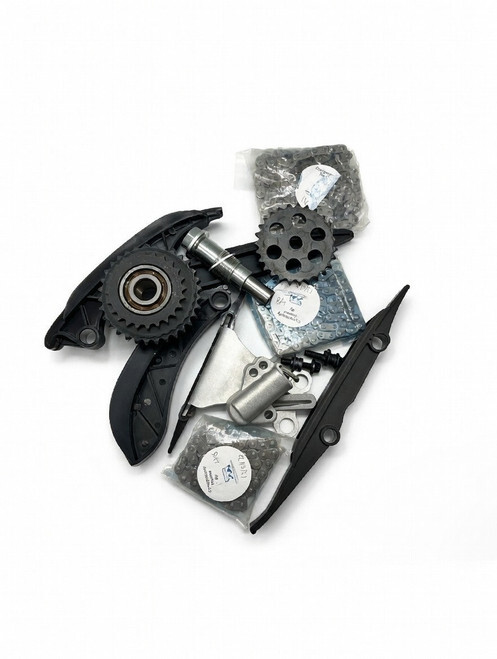
The B38 Cryo-Treated Race Timing Chain Kit for MINI and BMW B38 3-Cylinder Engines is SneedSpeed's timing-system reliability upgrade for the listed MINI and BMW B38 applications. The live product page lists SKU BSCTCK-2 and price $499.99. The product is built around a cryo-treated timing chain for timing stability and reliability.
Built from Racing. Proven by Results.
If we wouldn't run it, we don't sell it.
Why B38 Timing Chain Wear Should Not Be Ignored
- Statement: Most timing chain failures announce themselves before they become expensive.
- Story: A customer called about a startup rattle. He had heard it for months. Then months became a year. By the time the car arrived, the chain, guides, and tensioner were all significantly worn. The repair was no longer a simple timing service.
- Lesson: The cheapest timing chain repair is the one performed before failure.
That story applies beyond one engine family. Startup rattle is information. A timing fault is information. Poor idle with timing noise is information. The engine is not being dramatic. It is telling you that the system deserves inspection. A B38 is often a daily-driver engine. That makes people underestimate it. A street car still sees cold starts, heat cycles, oil aging, short trips, long commutes, and delayed maintenance. A track car or race car compresses that abuse into fewer hours. Either way, timing stability matters.
What This Kit Is For
The SneedSpeed B38 Cryo-Treated Race Timing Chain Kit is for a customer, shop, or engine builder who wants a stronger timing-chain choice while servicing a B38 timing system. The live product page lists fitment for BMW 118i, 218i, X1 and MINI Hatch, Clubman, Countryman, and Convertible B38 models. The exact vehicle should still be verified before ordering. This kit is not a magic answer for every noise. It belongs inside a proper repair plan: diagnose the symptom, confirm the engine, inspect the timing system, use verified service information, and install the parts correctly.
Customer Example: The Car That Still Drove Fine
- Statement: Drivable does not always mean healthy.
- Story: A customer hears a brief rattle but says the car still drives fine. We understand that reaction. If the engine starts, idles, and gets the customer to work, it is easy to push the repair down the list. We have seen that decision turn a manageable timing service into a larger repair because the customer waited until the sound became impossible to ignore.
- Lesson: The right time to inspect a timing noise is when the car is still running well enough to save.
That is the heart of this cluster. We are not telling every B38 owner to panic. We are saying the timing system should be inspected before noise becomes damaged.
Shop Example: Diagnose Before Selling Parts
- Statement: Parts swapping is not diagnostics.
- Story: A customer replaced sensors, coils, spark plugs, and fuel system components trying to solve a drivability problem. The actual issue was mechanical timing. Thousands of dollars were spent before the root cause was identified.
- Lesson: Diagnosis first. Parts second.
That shop lesson matters on the B38 because timing symptoms can overlap with other complaints. Rough idle can make a customer think about ignition. Reduced response can make a customer think about software. A check engine light can send the conversation in too many directions. The engine builder has to slow it down and inspect the system. Start with what the car is doing. Listen cold. Scan it. Check oil level and condition. Review service history. Confirm the noise source. Then build the repair plan.
Race Example: Why Reliability Parts Matter
- Statement: Racing exposes weaknesses faster than anything else.
- Story: Street cars spend most of their lives at partial throttle. Race cars do not. Every weak fastener appears faster. Every cooling issue appears faster. Every lubrication issue appears faster. Every assembly mistake appears faster.
- Lesson: What survives racing usually survives street use.
A B38 timing chain kit may be installed in a daily MINI, a BMW commuter, a track car, or a race car. The use case changes the urgency, but not the principle. Timing stability is part of engine reliability. A race car teaches us that hidden parts matter because the car only finishes if the unseen work holds together.
- Statement: Fast cars do not win endurance races. Reliable cars do.
- Story: During a 24-hour endurance event, speed mattered. Reliability mattered more. Cars with more horsepower dropped out. Cars with better preparation survived. The winner was not the most powerful car. It was the car still running.
- Lesson: Reliability is a performance modification.
That line is not a slogan to us. It is how we choose parts. If a timing chain is buried inside the engine and the labor matters, we want the part choice to support the repair.
What We Look For During Inspection
The inspection should match the complaint. On a B38 timing concern, we want to know:
- Does it rattle cold?
- Does the noise last longer over time?
- Is the noise coming from the timing area?
- Are timing-related faults stored or active?
- Does the engine idle poorly?
- Is the oil level correct?
- Is the oil clean and appropriate for the use?
- Is the vehicle a street car, track car, or race car?
- Has the timing system been serviced before?
- Is there evidence of guide, tensioner, or related wear during service?
We do not guess torque values or included components. We use verified service information for the exact vehicle and the current product page for current product details. That is how an engine builder protects the customer and the engine.
Why Cryo-Treated Makes Sense Here
The SneedSpeed product is a cryo-treated race timing chain kit. The product data positions it around timing stability and reliability. That is the reason for the part: a stronger timing-chain choice for a system where stretch and instability create expensive problems.
- Statement: Every part has consequences.
- Story: Over the years we tested parts that looked identical on the shelf. Some survived. Some did not. The difference often was not visible until thousands of miles or multiple race weekends later. That is why product selection became a rule.
- Lesson: If we wouldn't run it, we don't sell it.
A cheap timing chain can look fine on the counter. The question is how it behaves after heat cycles, miles, oil aging, and load. That is why we care about product selection before the engine is closed.
Installation Discipline Matters
The best chain still needs the right installation. Timing work is advanced. It needs the correct tools, correct service information, clean procedure, inspection of related parts, and verification before the car leaves. A shop should not treat this as “mark it and hope.” The B38 timing system controls engine position. If the relationship is wrong, the engine will tell you. Sometimes it tells you immediately. Sometimes it tells you after the customer has already paid and driven away. Neither is acceptable.
When To Act
Act sooner if the car has repeated startup rattle, timing noise, timing faults, poor idle, reduced response, or unknown service history. Act even sooner if the car is used as a track car or race car. A customer often wants to know whether they can keep driving. The honest answer depends on inspection. A light one-time noise is different from a harsh repeatable rattle with fault behavior. The risk climbs when symptoms stack together. The plain shop answer is this: do not wait for the B38 to prove the point the expensive way.
Final Shop Advice
If your B38 MINI or BMW is making timing-chain noise, start with diagnosis. Confirm the vehicle and engine. Listen cold. Scan the car. Check oil. Inspect the system. Then choose parts that fit the repair. The SneedSpeed B38 Cryo-Treated Race Timing Chain Kit is there for the customer who wants a timing-chain choice built around reliability, timing stability, and the same product-selection rule we use in the shop and on race cars.
Built from Racing. Proven by Results.
If we wouldn't run it, we don't sell it.
B38 Applications Need Fitment Discipline
The B38 shows up in more than one badge. The product page references MINI Hatch, Clubman, Countryman, Convertible, and BMW 118i, 218i, and X1 B38 models. That spread is useful for customers, but it also creates one of the easiest mistakes in parts ordering: assuming the badge tells the whole story.
It does not.
A MINI owner and a BMW owner can both be talking about a B38, but the shop still needs to verify the exact application before ordering and before disassembly. The right repair starts with identifying what is actually in front of us. We do not want a car apart while everyone discovers the parts conversation was built from an assumption.
- Statement: The right timing chain kit starts with the right engine identification.
- Story: A customer walks in and says, “It is the three-cylinder.” That helps, but it is not enough for us to stop asking questions. We still confirm the car, engine, production details, and current product page. That few minutes of checking can save a bay from being tied up waiting on the correct parts.
- Lesson: Verify before ordering. Verify again before installing.
Oil Is Part of the Timing System Conversation
Oil is not just lubrication in a timing-chain discussion. Oil condition affects tensioner behavior, chain life, and how quickly wear shows itself. A customer may describe startup rattle as if it exists by itself, but an engine builder also wants to know how the car has been maintained. Short trips, long intervals, low oil, poor oil quality, and hard use all matter. A street car that sees cold starts and stop-and-go use can be harder on parts than the owner realizes. A track car or race car adds heat and sustained load. Neither use case rewards neglect. We do not blame every B38 timing concern on oil. That would be lazy. But we do include oil level, oil condition, and service history in the timing-system inspection because oil is part of the reliability system.
What A Good B38 Timing Repair Should Feel Like
A good repair should not need a speech afterward. The car should start cleanly. The timing noise that brought the customer in should be addressed. The idle should be stable. The scan should not keep pointing back toward timing. The customer should understand what was inspected, what was replaced, and what to monitor after the repair. The repair is not finished when the chain is installed. It is finished when the system has been verified.
That matters because the B38 timing chain is not a dress-up part. Nobody sees it once the engine is closed. It earns its place by doing quiet work for a long time.
How We Sort Buyers In The Shop
A maintenance customer may be planning ahead because the car has mileage and unknown history. That customer needs a calm inspection and a service plan. A repair customer usually has noise, faults, or poor running. That customer needs diagnosis before parts. A rebuild customer is protecting a larger investment. If the engine is already apart, the timing-chain choice should support the whole build.
A track car customer is buying consistency under heat and load.
A race car customer is buying survival. The car has to finish.
The same B38 Cryo-Treated Race Timing Chain Kit can serve those customers, but the reason changes. That is why we talk through use case instead of handing every customer the same canned answer.
What Not To Do
Do not clear faults repeatedly and call that a repair. Do not hide startup rattle with thicker oil. Do not replace random sensors because the engine runs rough. Do not choose the cheapest timing chain only because it is buried and nobody will see it. That last point matters. Buried parts deserve more respect, not less. The harder a part is to access, the more carefully we choose it. If the B38 is making noise, diagnose it. If the timing system needs service, service it correctly. If the car is going to be driven hard, inspect it before the event, not after it comes back on a tow hook.
Planned Repair Beats Emergency Repair
A planned timing-chain repair lets the shop listen, scan, inspect, order correctly, and schedule the work without the engine forcing the decision. An emergency repair usually starts after the customer has ignored the sound long enough that the car no longer gives them choices.
- Statement: The best timing-chain repair is the one scheduled before failure.
- Story: We have had customers come in early, describe the noise clearly, and give us room to inspect the car properly. Those jobs are calmer. The customer understands the plan, the shop controls the process, and the engine has not been pushed to the edge. The opposite version is the car that arrives after months of warning signs, when the conversation is already more expensive.
- Lesson: Do not let the engine choose the repair date.
That is the conversation we want the customer to have while the car still starts, still runs, and still gives the engine builder room to prevent damage instead of reacting to it.