
N14 Head Stud Kit: Studs vs Standard Fasteners
Posted by Mamta Sharma on 13th Jul 2026
Customers usually ask whether they really need studs or whether standard fasteners are enough. The answer depends on the engine, use case, repair goal, and what is already apart.This N14 Head Stud buying guide focuses on choosing the right hardware based on the engine's actual requirements rather than marketing claims.
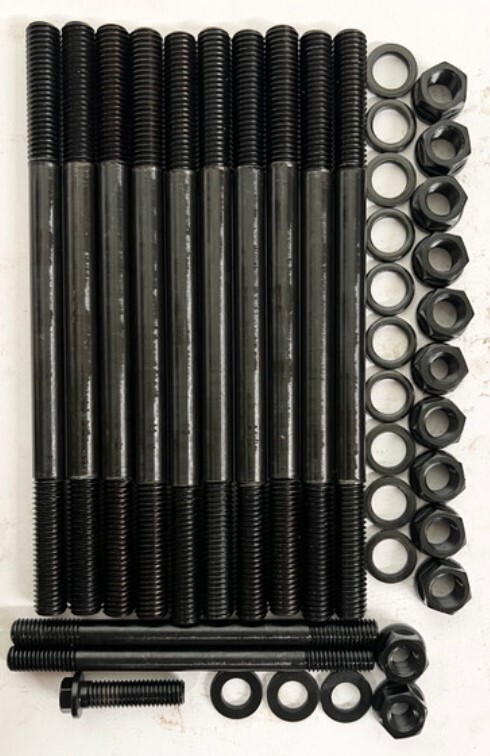
Product-Specific Considerations
factory fasteners versus stud upgrades for clamp-load consistency, serviceability, and higher-demand engine use.N14 cylinder head clamping is the primary role of a head stud kit, while N14 main cap clamping is handled by a separate main stud kit designed for the bottom end of the engine. An N14 engine sealing upgrade depends as much on proper assembly practices as it does on the hardware itself.
The Real Comparison
Statement:
The cheapest fastener choice is not always the cheapest repair.
Story:
A customer wants to save money because the engine repair is already expensive. We understand that. But if the fastener decision makes the repair less reliable, the savings disappear when the engine comes back apart.
Lesson:
Compare the whole repair, not only the hardware price.
Shop Example
Statement:
Studs are not a substitute for inspection.
Story:
A shop installs better hardware but ignores surface condition or thread quality. The customer expects the part to solve everything, but the engine needed a complete assembly plan.
Lesson:
Better hardware works best with better procedure.Proper N14 Head Stud installation requires clean threads, verified service information, correct lubrication, and careful assembly to achieve the intended clamp load.
Race Example
Statement:
Hard use makes weak choices visible.
Story:
Street cars may hide a marginal decision for a while. Race cars do not. Heat, load, and repeated pulls expose the assembly.
Lesson:
Buy for how the car will actually be used.The best N14 Head Stud Kit is the one that matches the engine build, intended operating conditions, and verified service requirements rather than simply being the most expensive option.