
N18 Timing Chain Symptoms: Rattle, Timing Faults, and What to Inspect First
Posted by Mamta Sharma on 6th Jul 2026
The customer usually says it the same way: “It only rattles for a second.” That sentence matters. A short startup rattle may be the first warning that the N18 timing system needs inspection. It may also be something else. The job is to listen, gather evidence, and avoid turning one symptom into a parts order. The R56 N18 Cryo Race Timing Chain Kit is the verified SneedSpeed timing-chain kit for the N18 application. Live product data lists price at $239.99 and SKU / Part Number N18CTCK. This article is not the buyer guide or installation guide. It focuses on diagnosis, symptoms, warning signs, fault codes, and inspection.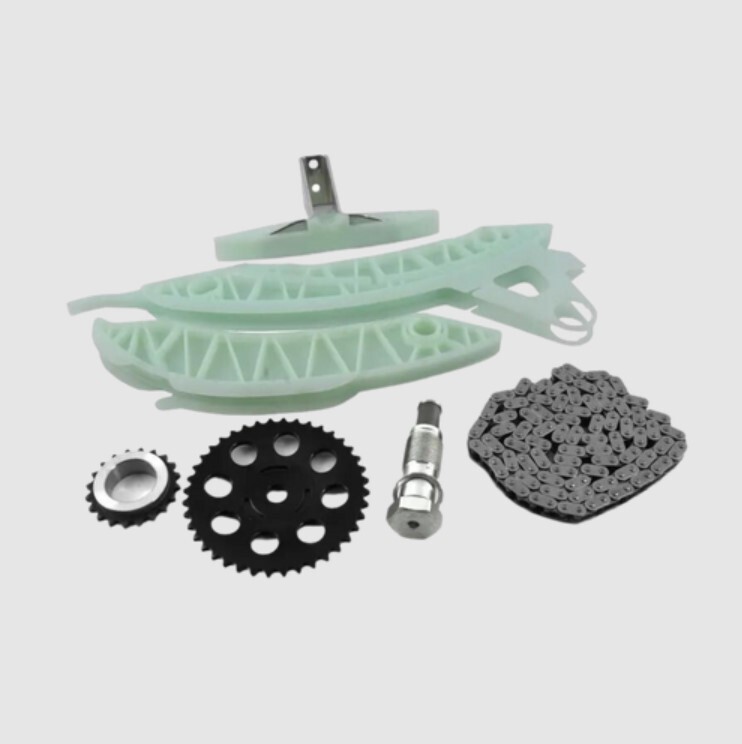
The Symptoms That Matter
The SneedSpeed product and technical sources support the following symptom list:
- Startup rattle
- Timing deviation
- Timing faults
- Mechanical timing noise
- VANOS-related timing faults
- Rough idle
- Reduced performance
- Check engine light
Those signs should put timing on the inspection list. They do not prove the chain is bad by themselves.
Statement
Most timing-chain failures announce themselves.
Story
A customer called about startup rattle. He had heard it for months. Months became a year because the car kept starting and driving. By the time it arrived, the timing system was significantly worn.
Lesson
The rattle was not the failure. It was the warning. The cheapest timing-chain repair is the one performed before failure.
Startup Rattle
Startup rattle is the symptom most MINI owners recognize first. It may happen after the car sits overnight. It may be worse in cold weather. It may fade once oil pressure comes up. The fact that it fades does not make it safe to ignore. For a complete overview, see our N18 timing-chain pillar article.
Document:
- Cold or warm start
- Length of rattle
- Frequency
- Oil level
- Oil service history
- Whether the noise is getting longer
- Whether fault codes are present
Do not rev the engine to “hear it better.” Do not pour in thicker oil to hide the sound. Do not clear the code and call the car repaired.
Timing Deviation and Fault Codes
Fault codes are useful, but they are not a parts list. The control system can tell us timing is not where it expects, but the engine builder still has to determine why. VANOS operation, oil condition, mechanical timing, wiring, and prior repair quality can all affect what the car reports. Proper N18 timing chain installation planning begins only after these checks are complete.
A good shop asks:
- What faults are current?
- What faults are stored?
- Do they return after clearing?
- Do they appear at startup, idle, or load?
- Does measured timing support the complaint?
- Was any timing or VANOS work recently performed?
If the codes and symptoms point toward timing-system wear, the repair conversation can move toward parts. If they point elsewhere, follow the evidence.
Rough Idle and Reduced Performance
A rough idle or power loss may come from timing, but it can also come from ignition, fuel, air, vacuum leaks, compression, or exhaust restriction. We have learned not to let a customer’s first description become the diagnosis.
Statement
Not every power problem is tuning.
Story
The race car felt slow. The tune looked correct. Boost looked normal. Ignition looked normal. After chasing possibilities, we found a partially clogged catalytic converter. The engine was not down on power because of software. It could not breathe.
Lesson
Verify airflow, fuel, ignition, compression, and timing evidence before blaming the chain. Diagnosis first. Parts second.
Inspection Path
A practical timing-chain inspection should include:
- Listen to the symptom under repeatable conditions.
- Check oil level and oil condition.
- Review service history.
- Read current and stored faults.
- Review timing and VANOS-related data.
- Inspect for mechanical noise from the timing side.
- Verify mechanical timing when evidence justifies it.
- Inspect related components during service.
The pillar article explains the full product and system picture. If you need that broader context, read the N18 Cryo Race Timing Chain Kit overview.
Warning Signs by Customer Description
Customers rarely describe a timing problem in technical language. They describe what they hear and feel.
“It rattles on cold start” usually points us toward the timing side of the engine, oil condition, and mechanical timing evidence.
“It runs rough after startup” makes us look at timing, VANOS, ignition, fuel, and air leaks.
“It feels slow” belongs in a wider diagnosis. Timing may be involved, but airflow, fuel pressure, ignition, and exhaust restriction stay on the board.
“The light came on after the noise started” is useful because symptom order matters. Save the fault data before clearing anything.
“It started after another shop worked on it” changes the inspection path. We look harder at prior assembly, fasteners, connectors, and timing procedure.
Fault Codes Need Context
Fault codes are not useless. They are also not the whole answer. A timing-related fault can be the control system reporting a mechanical problem, a VANOS control issue, an oil issue, or an assembly issue. The engine builder has to connect the code to the symptom.
Good diagnostic notes include:
- Fault code number and description
- Whether the fault is current or stored
- Freeze-frame conditions if available
- Oil level at the time of inspection
- Whether the rattle was present
- Whether faults return after clearing
- Any recent repairs
That documentation helps prevent the classic mistake: replacing the part named by the code instead of diagnosing the system that caused the code.
Inspection During Service
If timing service is approved, the inspection does not stop. When the engine is open, the shop should inspect the chain path, guides, tensioning components, fasteners, sprockets, seals, oil contamination, and evidence of contact or abnormal wear. That inspection is where the estimate may change. A good shop explains that possibility before the car is apart. A customer standing in the shop should know the difference between the base kit price and the complete repair scope.
Race Example: Symptoms Show Up Faster
On a race car, a weak timing system may not give the owner months of gentle warnings. Load, RPM, heat, and vibration compress the timeline. That is why race preparation favors inspection before symptoms. The same thinking helps a street car owner: do not wait for the symptom to become dramatic.
When to Stop Driving
No honest engine builder gives one universal mileage number. If the noise is persistent, the car runs poorly, timing faults return, or mechanical timing may have moved, stop driving and inspect the car. A tow bill is smaller than internal engine damage. If the rattle is brief but recurring, schedule diagnosis. Do not let repeat exposure turn the sound into background noise.
What Not to Do
Do not:
- Clear faults without saving them.
- Keep starting the car to record “one more” video.
- Rev the engine cold to make the noise obvious.
- Diagnose from a forum post.
- Buy a kit because another part did not fix the problem.
- Ignore oil level.
- Treat a short rattle as normal because it is familiar.
The symptom article exists to keep the customer from jumping straight to a cart. The product is strong. The diagnosis still has to be right.
Three Symptom Scenarios We See
Scenario 1: The brief cold-start rattle
The car starts, rattles for one second, then sounds normal. The customer is tempted to wait because the car still drives. This is the best time to inspect. The sound is short, the warning is early, and the repair may still be controlled.
Scenario 2: The rattle plus rough idle
Now the complaint includes idle quality. That widens the diagnosis. Timing stays on the board, but so do oil control, VANOS behavior, ignition, air leaks, fuel, and mechanical condition. The shop should not sell a chain kit until the evidence supports it.
Scenario 3: The track car after a hard weekend
The car did not rattle before the event. After repeated heat cycles and high-RPM use, the owner hears noise on startup. A track car deserves a faster inspection timeline because hard use accelerates weak points. The owner should not wait for the next event to “see if it clears up.”
Customer Questions That Help Diagnosis
When the MINI owner calls, we want details:
- Was the engine cold?
- How long had it sat?
- Did the oil light come on?
- Was the oil level checked?
- Did the rattle happen once or repeatedly?
- Did the check-engine light appear before or after the noise?
- Did anyone recently work on the engine?
- Has the car been tracked, tuned, or overheated?
Those answers reduce guessing. They also help the shop decide whether the car should be driven in, towed in, or parked until inspected.
The Difference Between Noise and Evidence
Noise begins the conversation. Evidence directs the repair. The shop needs to connect what the customer hears to what the engine shows. That may include fault data, timing data, oil condition, physical inspection, and mechanical verification.
This is where good diagnostics saves money. A customer who buys every part suggested by every forum thread can spend more than the correct repair would have cost. A customer who gathers evidence first gives the engine builder a chance to make one clean decision.
When the Kit Enters the Conversation
The verified SneedSpeed kit enters the conversation after the diagnosis points at timing-system service. Then the product facts matter: verified URL, $239.99 price, SKU N18CTCK, cryogenically hardened chain, better durability, reduced stretch, and stable timing. That is buying information, not diagnostic proof.
If the diagnosis says timing, the kit belongs on the plan. If the diagnosis says something else, the kit can wait.
Statement
Cars are always telling you something.
Story
A customer once chased drivability by replacing sensors, coils, plugs, and fuel parts. The actual problem was mechanical timing. Money was spent, but evidence had not been gathered in the right order.
Lesson
Do not buy the N18 kit because other guesses failed. Buy the kit when inspection supports timing-system service.
Symptom Priority Table
|
Symptom |
Priority |
Shop response |
|---|---|---|
|
Brief cold-start rattle |
High |
Schedule diagnosis, check oil, save fault data |
|
Rattle getting longer |
High |
Inspect promptly, avoid normalizing the sound |
|
Persistent mechanical noise |
Critical |
Stop driving and inspect before further operation |
|
Timing deviation |
High |
Verify mechanical and control-system evidence |
|
Check-engine light with poor running |
High |
Save codes, inspect, do not keep clearing faults |
|
Rough idle only |
Medium |
Diagnose broadly; timing is one possible cause |
|
Power loss only |
Medium |
Check timing, fuel, air, ignition, exhaust, compression |
This table does not replace the engine builder. It helps the customer understand why some complaints can wait for a scheduled appointment and others should not be driven around town.
What the Customer Should Bring
Bring the story of the car. Bring service records if you have them. Bring the oil history. Bring the fault-code report if another shop scanned it. Bring the video if the rattle is intermittent. Tell the shop whether the car is a street car, track car, race car, maintenance job, or rebuild. The better the story, the faster the engine builder can separate noise from evidence.
Final Diagnostic Filter
Before the kit goes on the estimate, the shop should be able to say why the timing system is the target. Not a guess. Not a hunch. A reason. The symptom, fault data, oil condition, and inspection should point in the same direction.
Shop Example: The Counter Conversation
A MINI owner stands at the counter with a phone recording of the startup noise. That recording helps. It does not finish the diagnosis. We ask when it happens, how long it lasts, what oil is in the car, whether the check-engine light is on, and whether the engine has been worked on. If the evidence supports timing service, the verified R56 N18 Cryo Race Timing Chain Kit becomes part of the repair plan. If the evidence points elsewhere, the honest answer is to keep diagnosing.