
N20 Timing Chain Installation Planning: What Has To Be Right Before Startup
Posted by Mamta Sharma on 8th Jul 2026
A N20 timing chain installation is advanced work. The chain choice matters, but the process matters just as much. This article is not a torque-spec sheet. It is the shop conversation about tools, preparation, procedure planning, common mistakes, verification, and post-install checks.
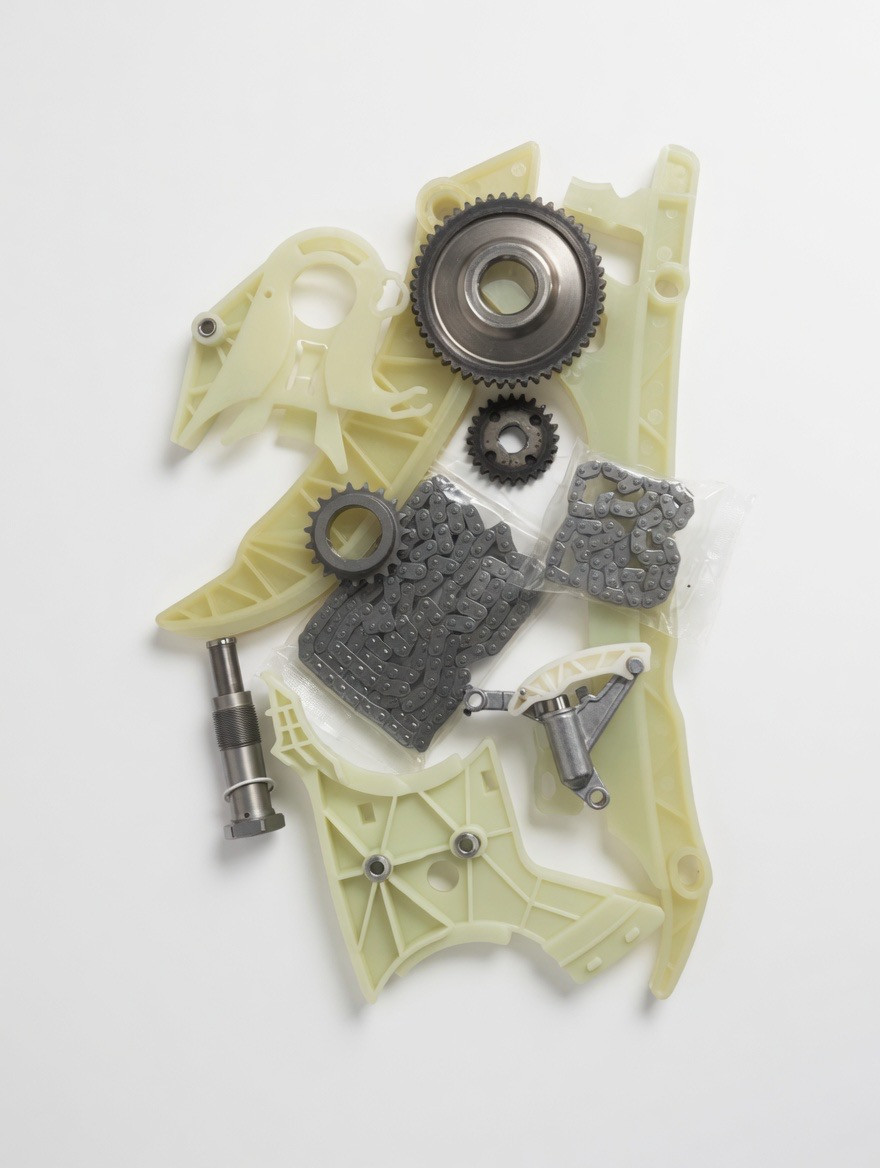
Confirm The Application First
- Statement: The right installation starts before the car is apart.
- Story: A customer says the car has a N20. That helps, but it does not finish the job. We still confirm the exact application against the current product page before parts are ordered and before the engine is opened.
- Lesson: Fitment mistakes are easier to prevent than fix mid-job.
The product page lists SKU n20ctck and price $279.99. Verify current product information before installation.
Tools And Preparation
A professional N20 timing-chain service should be planned around verified service information, correct timing tools, scan tool access, clean work area, parts organization, oil and filter planning, inspection lighting, required fasteners, timing verification, and post-install checks. We do not publish guessed torque values. Use verified service information. Timing work is not the place for borrowed numbers or memory.
Shop Example: Paint Marks Are Not Timing Tools
- Statement: A paint mark is not a precision tool.
- Story: We have seen timing work come in after someone marked parts, moved fast, and hoped the engine would be close enough. Close enough is not how an engine builder treats cam and crank relationship.
- Lesson: Use the correct tools and verify timing mechanically.
Procedure Planning
Start with the complaint. Was there a startup rattle? Was there a timing fault? Was idle poor? Was the car down on power? If the original problem is not documented, nobody can confidently say the repair solved it.
A clean plan confirms the application, records the complaint, scans before disassembly, checks oil condition, uses verified service information, inspects the complete timing system, installs correctly, verifies timing, starts the engine as a controlled check, then scans and road tests appropriately.
Customer Example: Can We Just Do The Chain?
- Statement: The chain is important, but it is not the whole timing system.
- Story: A customer wants the smallest repair possible. We understand the budget pressure. But if the timing system is open and related wear is visible, ignoring it can bring the same car back with the same complaint.
- Lesson: Fix the cause, not only the most visible part.
Race Example: Verification Wins
- Statement: Race cars punish skipped checks.
- Story: On a race car, a missed assembly detail does not wait politely. Heat, load, and RPM expose it quickly. We learned to verify because a small missed step can end a weekend.
- Lesson: The verification step is part of the installation.
Common Mistakes
Avoid misidentifying the application, ordering before confirming fitment, skipping proper timing tools, guessing torque values, ignoring oil condition, ignoring guide or tensioner wear, failing to scan before and after, closing the engine before timing verification, or calling one warm restart proof. SneedSpeed recommends following verified service information throughout every BMW N20 timing chain installation.
- Statement: Most catastrophic engine failures start with a small shortcut.
- Story: We ran the same MINI engine through three separate three-hour endurance races. The engine survived. Oil pressure was good. Temperatures were good. The problem was a reused torque-to-yield crank bolt. Timing moved. The engine suffered damage that cost far more than a new crank bolt ever would have.
- Lesson: A cheap fastener can destroy an expensive engine. If BMW says replace it, replace it.
Post-Install Checks
Before the car leaves, confirm startup behavior, idle quality, oil level, scan results, leaks, and road-test behavior. If the N20 is a track car or race car, inspect after heat cycles and do not skip the boring checks.
Frequently Asked Questions
- What is involved in an N20 timing chain installation?
A proper N20 timing chain installation requires confirming fitment, using the correct timing tools, verifying mechanical timing, and completing post-install checks before returning the vehicle to service. - Why is BMW N20 fitment important before installation?
Every BMW N20 application should be confirmed before ordering parts or beginning the repair to ensure the correct timing components are installed. - Should I replace only the timing chain?
Not always. If guide or tensioner wear is present, the complete timing system should be inspected so the original problem is fully corrected. - Why are timing verification and post-install checks important?
Mechanical timing should always be verified before startup, followed by scan checks, leak inspection, idle verification, and a controlled road test to confirm the repair. - Can poor installation cause timing problems?
Yes. Skipping proper tools, ignoring inspection steps, or rushing verification can lead to incorrect timing, repeat repairs, or serious engine damage.
Conclusion
A successful timing chain repair depends on more than installing new parts. Proper planning, accurate fitment, the correct tools, and careful verification all play a critical role in long-term engine reliability. Taking the time to inspect the complete timing system before startup helps prevent repeat failures and protects your BMW N20 investment. Ready to complete your repair with confidence? Explore the BMW N20 Cryo Timing Chain Kit from SneedSpeed and choose timing components built for lasting durability and reliable performance.