
R56 N18 Cryo Race Timing Chain Kit: What Your MINI Is Telling You Before the Repair Gets Expensive
Posted by Mamta Sharma on 6th Jul 2026
You start the MINI cold and hear a sharp rattle before the idle smooths out. Maybe it disappears in one second. Maybe it has been getting longer. Maybe the check-engine light is on, the car feels flatter than it used to, or a shop mentioned timing deviation. You are standing in the shop asking the right question: “Is this a timing chain problem, and what should I do before it gets worse?” That is where an engine builder slows the conversation down. We do not diagnose an N18 by nickname, and we do not sell a timing kit before the engine has been inspected. Startup rattle, timing deviation, timing faults, and mechanical timing noise are real warning signs, but they need evidence. Oil level matters. Service history matters. VANOS-related data matters. Previous repairs matter. The chain, guides, tensioning system, fasteners, and mechanical timing all work as one system. The verified SneedSpeed product for this job is the R56 N18 Cryo Race Timing Chain Kit. The live product data lists price at $239.99, SKU / Part Number N18CTCK, category Timing Chain Kit, platform R56, make MINI, model MINI Cooper S / JCW, and engine N18. The page describes the kit as cryogenically hardened for better durability, reduced stretch, and more stable timing.
Built from Racing. Proven by Results. If we wouldn't run it, we don't sell it.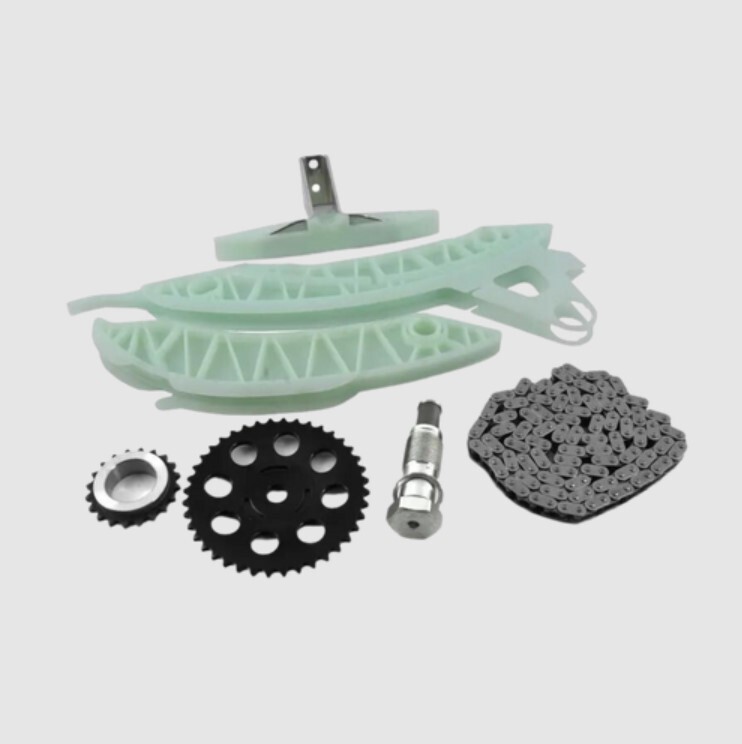
The Problem Comes First
The customer usually arrives with a symptom, not a part number. The car rattles at startup. It has a timing fault. It idles poorly. It feels down on power. The worst repair decision is buying parts before proving what the car is telling us.
An N18 timing-chain conversation should start with:
- When the rattle happens
- Whether the engine is cold or warm
- Oil level and oil condition
- Fault codes and timing data
- VANOS-related evidence
- Prior timing or engine work
- Whether the car is a street car, track car, race car, rebuild, or maintenance job
If the symptoms are still being sorted out, start with the N18 timing chain symptoms guide. This pillar article gives the full view. The symptoms article stays focused on diagnosis and inspection.
What the N18 Cryo Race Kit Is
The R56 N18 Cryo Race Timing Chain Kit is a timing-system reliability service and upgrade for the listed N18 MINI application. The live product page gives us the facts we can use without pretending:
- Verified product URL: R56 N18 Cryo Race Timing Chain Kit
- Price: $239.99
- SKU / Part Number: N18CTCK
- Category: Timing Chain Kit
- Engine: N18
- Platform: R56
- Model: MINI Cooper S / JCW
- Product language: cryogenically hardened for better durability, reduced stretch, and more stable timing
That is enough to build a responsible product conversation. It is not permission to invent included components, torque specs, or service-life promises. The right way to sell this kit is to connect the live product facts to the real repair in front of us.
Why Timing Stability Matters
The timing chain keeps the crankshaft and camshafts in the correct relationship. When that relationship becomes unstable, the engine can start giving warnings: rattle, timing deviation, timing faults, mechanical noise, rough idle, or reduced performance. On a street car, those warnings may develop slowly. On a track car or race car, the same weakness can show up faster because load, heat, RPM, and repeated transitions compress the timeline. The SneedSpeed Technical Library puts it simply: timing chains rarely fail suddenly. Most timing-chain failures announce themselves. That does not mean every sound is the chain. It means the engine is giving you information.
Statement
Most timing-chain failures announce themselves.
Story
A customer called about startup rattle. He had heard it for months. Months became a year because the MINI still started and drove. By the time the car arrived, the chain, guides, and tensioner were significantly worn. The repair was no longer the simple timing service it could have been.
Lesson
The cheapest timing-chain repair is the one performed before failure. A short rattle deserves diagnosis before it becomes the soundtrack of every cold start.
The System Around the Chain
A timing chain is not an island. Guides control path. Tensioning components control slack. Sprockets and phasing components transmit and control movement. Oil condition affects wear and control. Fasteners hold the system together. The installer’s procedure decides whether the new parts begin life correctly. That is why the N18 timing chain installation article focuses on tools, preparation, verification, and post-install checks rather than repeating this whole product overview. Installation is where a good part can be ruined by a bad process.
Do not use paint marks as a timing procedure. Do not reuse one-time-use fasteners where the verified procedure says replace them. Do not guess torque or angle values. Do not start the engine until mechanical timing has been verified.
Street Car, Track Car, Race Car
A street car needs reliability, clean starts, and a repair that does not create a second bill. A track car needs that plus tighter inspection discipline because it sees repeated load and heat. A race car needs timing stability as part of the whole program. Understanding N18 timing chain symptoms helps guide the maintenance plan. The product may be the same, but the maintenance plan is not.
Statement
Racing exposes weaknesses faster than anything else.
Story
Street cars spend most of their lives at partial throttle. Race cars do not. Weak fasteners show up faster. Cooling issues show up faster. Lubrication issues show up faster. Assembly mistakes show up faster.
Lesson
What survives racing usually teaches a useful lesson for street use: preparation matters, inspection matters, and every related component deserves attention.
Diagnosis First, Parts Second
A timing kit belongs in the repair plan after diagnosis, not before. We have seen customers replace sensors, coils, spark plugs, and fuel-system parts while chasing drivability problems. The actual issue was mechanical timing. That is why N18 timing chain installation planning should begin only after proper diagnosis, not before.
The N18 Cryo Race kit makes sense when the engine has been confirmed as N18, the application fits the live product listing, and the timing system needs reliability service, preventive maintenance, or rebuild support. If the evidence points elsewhere, fix the actual problem first.
Product Value
The live price gives the buyer a real anchor: $239.99 for SKU N18CTCK. The installed value depends on more than the box. Labor, tools, service information, fluids, fasteners, seals, related parts, and the installer’s verification process all affect the final repair.
The [comparison article](support-comparison.md) covers OEM vs aftermarket, standard vs race, value, cost, durability, and application differences. The [buying guide](support-buyers-guide.md) covers purchase decisions, fitment, budgeting, related products, and customer types.
Fitment Is a Shop Conversation
The live product record gives us the working application: R56, MINI, Cooper S / JCW, N18. That is the starting point. In the shop, we still verify the car before ordering because second-generation MINIs have lived real lives. Engines get swapped. Service records get lost. Previous owners install the wrong parts. A customer may know the model year but not the engine code.
The right counter conversation sounds like this:
- Confirm the VIN and application.
- Confirm the engine is N18.
- Confirm the current product listing.
- Confirm the SKU: N18CTCK.
- Confirm the symptoms or service reason.
- Confirm the installer can time the engine correctly.
Review the N18 cryo timing chain vs OEM comparison before making a final product choice. That last point matters as much as the product. The best timing-chain kit still depends on the person setting the timing.
Oil, Heat, and Maintenance
The SneedSpeed Technical Library says oil is part of the timing system. That sentence belongs in every serious N18 timing conversation. Oil level, oil condition, filter condition, temperature, and service interval affect how the timing system lives.
For a street car, the customer may need a conservative oil plan and a habit of checking the level. For a track car, the owner should think in sessions, oil temperature, and inspection intervals. For a race car, oil strategy is part of event preparation. The N18 timing chain buyer guide can help owners choose the right timing kit based on how the vehicle is used.
If the car has startup rattle and a neglected oil history, do not treat the chain as the only suspect. The timing system may be worn, but the oil story explains how it got there and what has to change after repair.
What This Kit Does Not Replace
The N18 Cryo Race kit does not replace diagnosis. It does not replace the service procedure. It does not replace timing tools. It does not replace careful inspection. It does not replace maintenance after installation. That may sound obvious, but it is exactly where timing repairs go wrong. A customer buys the part and assumes the risk is gone. The shop installs the part and assumes the job is done. Then nobody asks whether the oil pressure was verified, whether timing was checked twice, whether faults returned, or whether the driver understands the maintenance plan. We treat the kit as a strong component inside a larger repair. That is how an engine builder protects the customer.
Three Real-World N18 Buyer Situations
Street car with startup rattle
The MINI is driven to work and back. The rattle is brief, but it is happening more often. The customer wants the lowest-stress answer. The correct path is diagnosis, oil inspection, fault scan, and timing-system evaluation. If timing service is justified, the Cryo Race kit makes sense as part of a complete reliability repair.
Track car with no current rattle
The car is used hard but maintained well. The engine is apart for other work. This is where preventive timing service can be smart. The owner is already paying for access and wants the car to survive repeated sessions. The timing kit is not a panic purchase; it is part of planning.
Race car before an event
The question is not whether the chain makes horsepower. The question is whether the timing system can be trusted after hours of load, heat, and vibration. For a race car, a timing-chain decision belongs with oil, cooling, fasteners, data, and inspection records.
Common Questions at the Counter
1. Will this kit fix every N18 rattle?
No. It addresses timing-system service when diagnosis supports timing-chain work. A rattle from another source needs a different repair.
2. Is the Cryo Race kit only for a race car?
No. Race experience influences the standard, but a street car can benefit from reliability thinking. The key is matching the part and the repair plan to the car.
3. Should I buy the kit before diagnosis?
Usually no. If the engine is already apart for a rebuild, the timing plan may be part of that job. If the car is simply making noise, diagnose first.
4. Is price the deciding factor?
No. The live price is useful, but the installed repair matters more. A timing-chain job is not where we chase the cheapest box without considering labor risk.
How We Explain It to the Customer Standing Here
If you were standing in the shop with the hood open, I would point at the engine and explain it this way: the chain is the part everyone names, but the repair is not just “a chain.” The repair is restoring control of the timing system. That means the part, the oil, the guides, the tensioning strategy, the fasteners, the installer, and the verification process all have to agree.
The R56 N18 Cryo Race Timing Chain Kit gives us a verified SneedSpeed product to build around. It gives us a live URL, live price, and SKU. It gives us the product-positioning language: cryogenically hardened, better durability, reduced stretch, stable timing. Now the shop has to do its part. We confirm the engine, prove the symptom, inspect the system, and install with the right tools.
That is the difference between a sales conversation and an engine-builder conversation. A sales conversation says, “Here is a kit.” An engine-builder conversation says, “Here is the kit, here is why it fits the job, here is what else we inspect, and here is how we verify the repair before you leave.”
What Makes the N18 Different From a Generic Timing Job
The N18 is not serviced by vague memory. It needs the correct timing procedure and the correct tools. It also needs a technician who respects how small errors become expensive. If mechanical timing is not established correctly, the engine may not care that the box on the bench was a good one. The finished assembly is the test. Choosing the right MINI Cooper S N18 timing chain kit is only part of a successful repair. That is why the installation article goes deep on preparation instead of repeating the symptoms article. The symptom article helps decide whether timing belongs in the diagnosis. The installation article protects the repair once the decision is made. The comparison article helps choose between product approaches. The buyer guide keeps the customer from buying before fitment, budget, and installer are understood.
Each page has a job. Together, they cover the full cluster without making the customer read the same explanation five times.
Maintenance After the Repair
A timing-chain repair should end with a maintenance plan. The customer should know what oil strategy will be used, when the first post-repair check should happen, what symptoms require a call, and how use changes service intervals. A daily street car may get a conservative mileage and time plan. A track car should add event-based inspection. A race car should track engine hours, oil condition, temperature history, and any fault activity. The harder the engine is used, the more the owner should stop thinking like a casual commuter and start thinking like a crew chief. That is not overkill. It is how we keep a good repair from becoming an old repair too soon.
Why This Cluster Links the Way It Does
If you are early in the problem, start with symptoms. If diagnosis is complete and the job is approved, move to installation planning. If you are deciding between product types, read the comparison. If you are about to buy, use the buyer guide. If you need the complete shop explanation, stay on this pillar page.
That link structure is not decoration. It is how we keep the customer from jumping ahead. Timing-chain work gets expensive when the order is wrong: buying before diagnosis, installing before preparation, comparing before fitment, or calling the job complete before verification.
What We Would Write on the Work Order
If this car were in the shop, the work order would not say only “install timing chain.” It would include the customer complaint, diagnosis path, product selected, related inspection items, and verification requirements.
A clean work order might read:
- Customer reports startup rattle.
- Confirm N18 application.
- Scan and document timing/VANOS-related faults.
- Inspect oil level and condition.
- Verify timing-system service need.
- Install R56 N18 Cryo Race Timing Chain Kit, SKU N18CTCK, if diagnosis supports repair.
- Inspect guides, tensioning components, seals, fasteners, and related hardware.
- Use verified N18 service information.
- Verify mechanical timing before startup.
- Prime and verify oil pressure.
- Scan, road test, inspect, and document.
That kind of work order protects everyone. The customer sees the plan. The technician follows the plan. The car gets a repair that can be explained after the fact.
Why We Keep Coming Back to Verification
Verification is not distrust. It is engine building. A timing system does not become correct because the cover is back on. It becomes correct because the installer proves it. That proof may include tool fitment, controlled rotation, scan data, oil pressure, leak checks, and a clean road test.
We have learned that a confident installer can still make a mistake. The difference is whether the process catches it before the engine is asked to run. That is the shop culture behind this product cluster: build it, check it, and then check it again.
Final Shop Filter
Before we recommend the kit, we run the decision through a simple filter. Does the engine match? Does the symptom support timing-system work? Does the customer understand the complete repair? Does the installer have the tools? Does the maintenance plan match the way the car will be used?
If those answers are yes, the R56 N18 Cryo Race Timing Chain Kit is easy to defend. If one answer is no, that missing piece gets solved before the product becomes the focus.
The Last Thing We Tell the Owner
The timing system is not a place to gamble. If the N18 is quiet, documented, and maintained, keep it that way. If it is starting to rattle, inspect it. If the engine is apart, plan the timing service while access is available. If the car is going to the track or a race weekend, prepare it before the symptom appears.
That is how we think in the shop. We are not trying to make every repair bigger. We are trying to make the repair make sense before the engine teaches the lesson the expensive way.
That mindset is what keeps a repair honest, measurable, and worth standing behind every single time in the shop.
Statement
Every part has consequences.
Story
Over the years we tested parts that looked identical on the shelf. Some survived. Some did not. The difference often was not visible until thousands of miles or multiple race weekends later.
Lesson
If we wouldn't run it, we don't sell it. That rule matters most when the part lives inside the engine.
The Builder’s Bottom Line
The R56 N18 Cryo Race Timing Chain Kit is a verified SneedSpeed timing-chain kit for the N18 MINI application, built around cryogenic hardening, durability, reduced stretch, and stable timing. It is not a shortcut around diagnosis. It is not a substitute for correct tools. It is not a reason to ignore guides, tensioning components, fasteners, oil, or timing verification. If your MINI is rattling, start with inspection. If the timing system needs service, build the repair as a system. If the car sees track or race use, shorten the inspection interval and keep better records. Reliability is a performance modification.